
USS HARRY S. TRUMAN (CVN-75) 2.0
13 photosI used AI to restore archival photographs taken in 2005 aboard the American nuclear-powered aircraft carrier USS Harry S. Truman (CVN-75). Back then, I was shooting with a basic point-and-shoot film camera fitted with a plastic lens. It was one of the most unusual assignments of my journalism career. Operation Iraqi Freedom was still underway in the Middle East. At the invitation of the U.S. Embassy, our television crew from Kazakhstan's Khabar TV channel traveled to Bahrain, home to the headquarters of the U.S. Navy's Fifth Fleet. I was accompanied by cameraman Nikolai Kishenin and reporter Saken Abdiyev. Our assignment was to cover a visit by a Kazakhstani military delegation, led by Admiral Ratmir Komratov, to the aircraft carrier USS Harry S. Truman, which was operating in the Persian Gulf. We were flown to the carrier aboard a Grumman C-2A Greyhound military transport aircraft. Landing on an aircraft carrier is an adventure in itself. The aircraft touches down on the flight deck at approximately 200–250 km/h, after which an arresting cable brings it to a complete stop in just a couple of seconds. The deceleration forces and the sensations are absolutely unforgettable! The USS Harry S. Truman is the eighth Nimitz-class nuclear-powered aircraft carrier, commissioned into the U.S. Navy in 1998. With a full-load displacement of approximately 97,000 tons, the ship measures 333 meters in length. Two nuclear reactors power four propeller shafts. The carrier accommodates around 70 aircraft and helicopters, while its total complement, including the embarked air wing, exceeds 5,500 personnel. We spent two days aboard the carrier. We were provided with workstations in the press center. Interestingly, the ship even has its own television studio, TV channel, and fully functioning newsroom. The most exciting action took place on the flight deck, where combat sorties were being launched almost continuously. The carrier's air wing included F/A-18 Hornet strike fighters, the legendary F-14B Tomcat carrier-based fighters, EA-6B Prowler electronic warfare aircraft, E-2C Hawkeye airborne early warning aircraft, S-3B Viking anti-submarine aircraft, and SH-60F and HH-60H Seahawk helicopters. I was particularly impressed by the F-14B Tomcats of Fighter Squadron VF-32. Just a year later, in 2006, these legendary aircraft were permanently retired from U.S. Navy service. Life aboard the carrier was equally impressive. The enormous galley prepared tens of thousands of meals every day. The menu featured dishes from various national cuisines, and fresh fruit was available in virtually unlimited quantities. We ate in the officers' mess, where meals were served by waitstaff. We slept in the air wing's berthing quarters. The sleeping arrangements consisted of cramped individual bunks, each equipped with a small light and a privacy curtain. Getting a good night's sleep was impossible: fighter jets were taking off throughout the night, and the entire ship seemed to shake with every launch from the steam catapults. The following day, the Kazakhstani delegation arrived. Flight operations were temporarily suspended for the official ceremony, some aircraft were moved down to the hangar deck, and the flight deck was thoroughly washed. This gave us a rare opportunity to take a closer look at the carrier's aircraft and photograph them without the usual rush of flight operations. We returned to Bahrain aboard a Seahawk helicopter. More than 20 years have passed since that assignment, but the experience remains one of the most vivid and unforgettable memories of my journalism career.
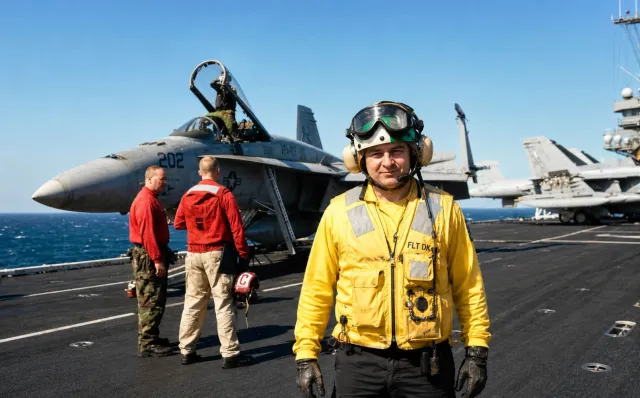 The author aboard the USS Harry S. Truman (CVN-75)
USS HARRY S. TRUMAN (CVN-75) 2.0
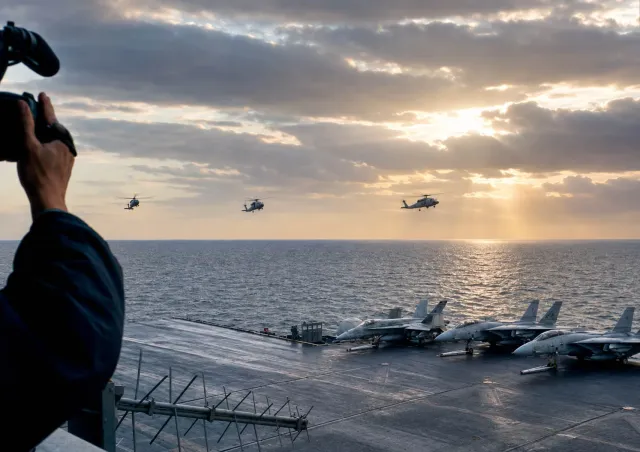 At the edge of the flight deck are an F/A-18 Hornet and a pair of F-14 Tomcats. In the background, three HH-60H Seahawk helicopters are approaching for landing.
USS HARRY S. TRUMAN (CVN-75) 2.0
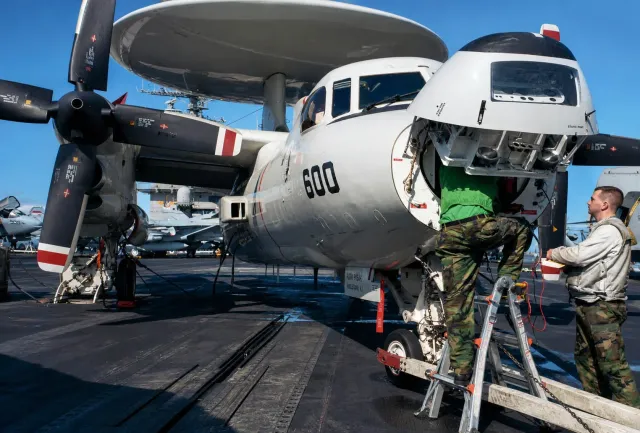 Maintenance of the E-2C Hawkeye airborne early warning aircraft
USS HARRY S. TRUMAN (CVN-75) 2.0
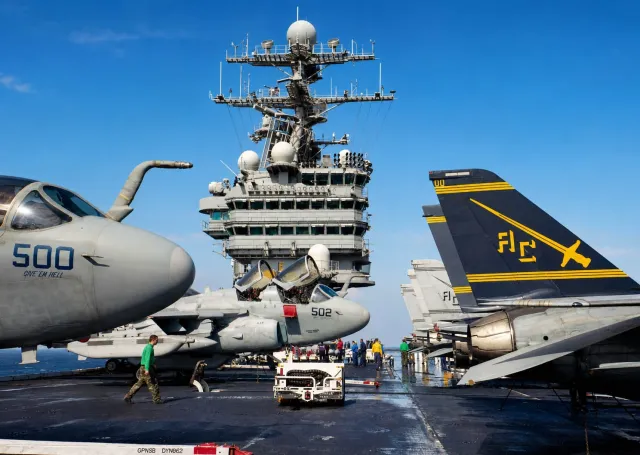 On the flight deck
USS HARRY S. TRUMAN (CVN-75) 2.0
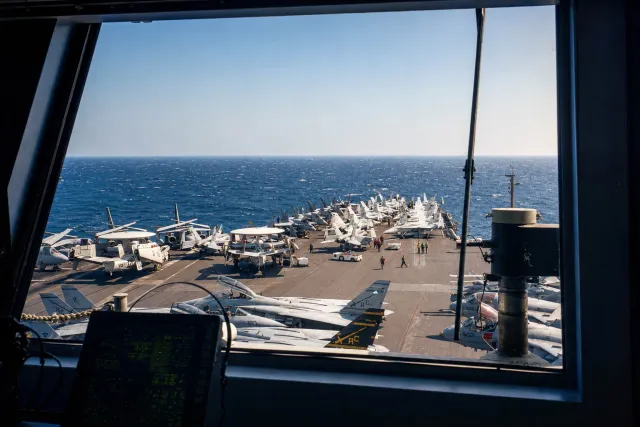 View from the Mini Boss’s station (the flight deck control officer’s station)
USS HARRY S. TRUMAN (CVN-75) 2.0
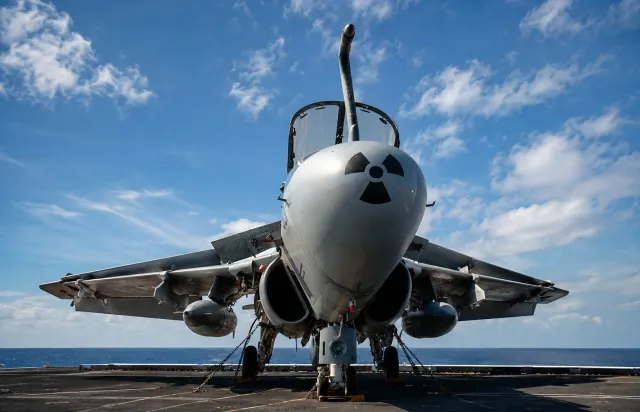 Grumman EA-6B Prowler — a carrier-based electronic warfare aircraft
USS HARRY S. TRUMAN (CVN-75) 2.0
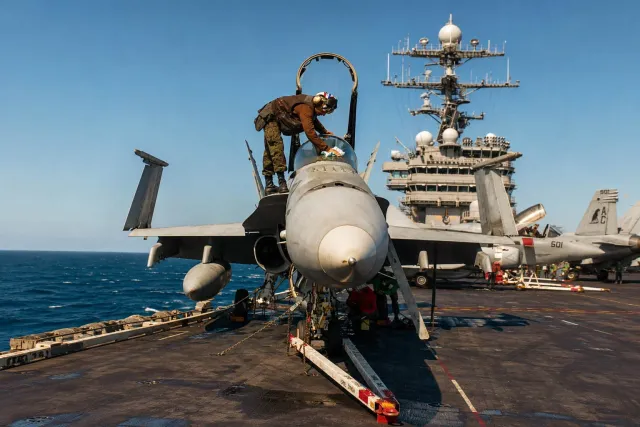 Maintenance of an F/A-18 Hornet
USS HARRY S. TRUMAN (CVN-75) 2.0
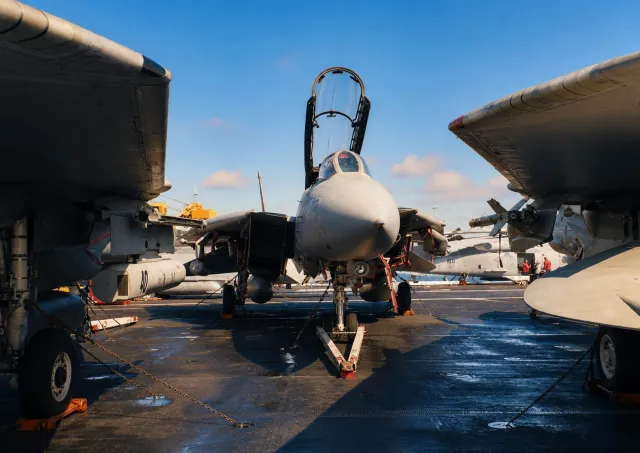 F-14B Tomcat
USS HARRY S. TRUMAN (CVN-75) 2.0
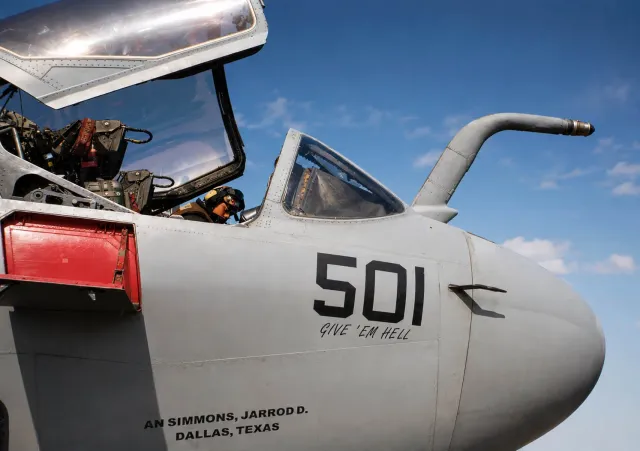 An interesting inscription on the aircraft's fuselage
USS HARRY S. TRUMAN (CVN-75) 2.0
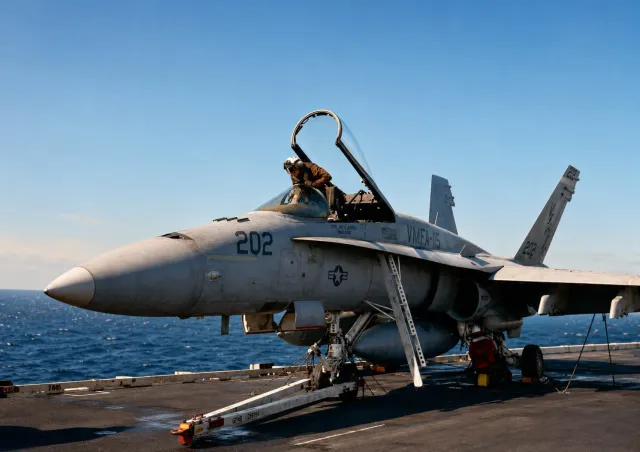 F/A-18 Hornet strike fighter
USS HARRY S. TRUMAN (CVN-75) 2.0
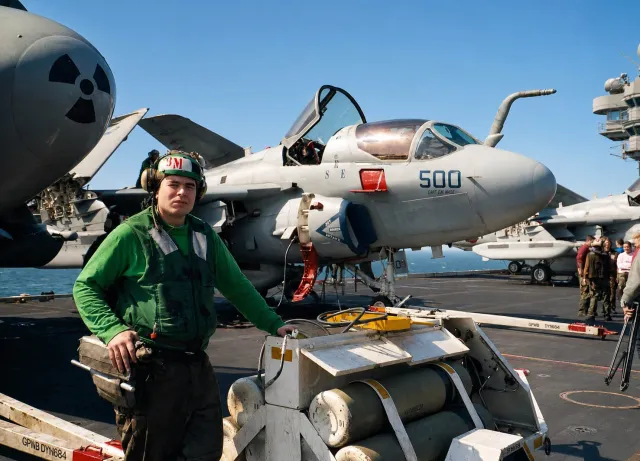 Grumman EA-6B Prowler — a carrier-based electronic warfare aircraft
USS HARRY S. TRUMAN (CVN-75) 2.0
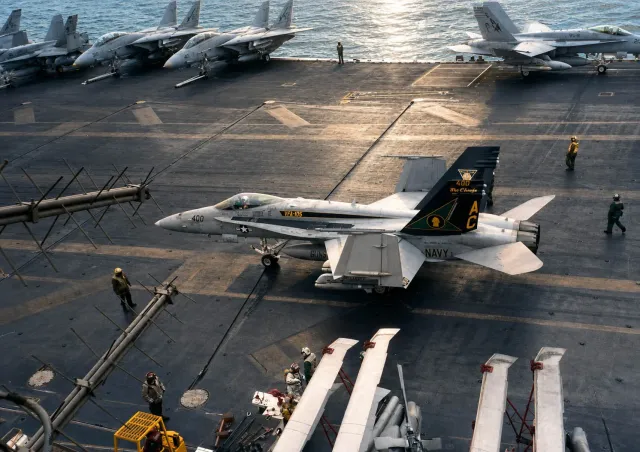 An F/A-18 Hornet prepares for takeoff. An F-14 Tomcat is visible in the background on the left
USS HARRY S. TRUMAN (CVN-75) 2.0
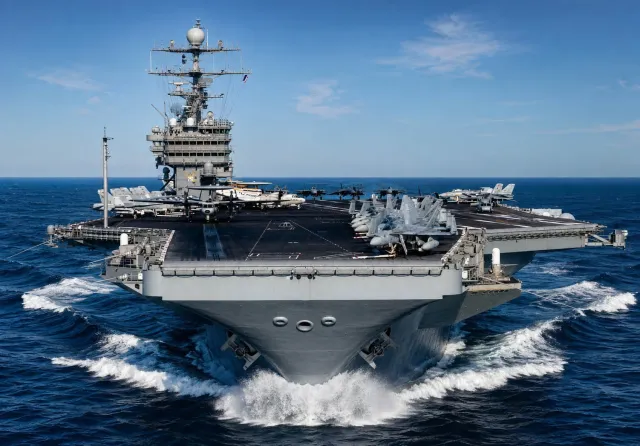 USS Harry S. Truman (CVN-75) — Persian Gulf, 2005
USS HARRY S. TRUMAN (CVN-75) 2.0